
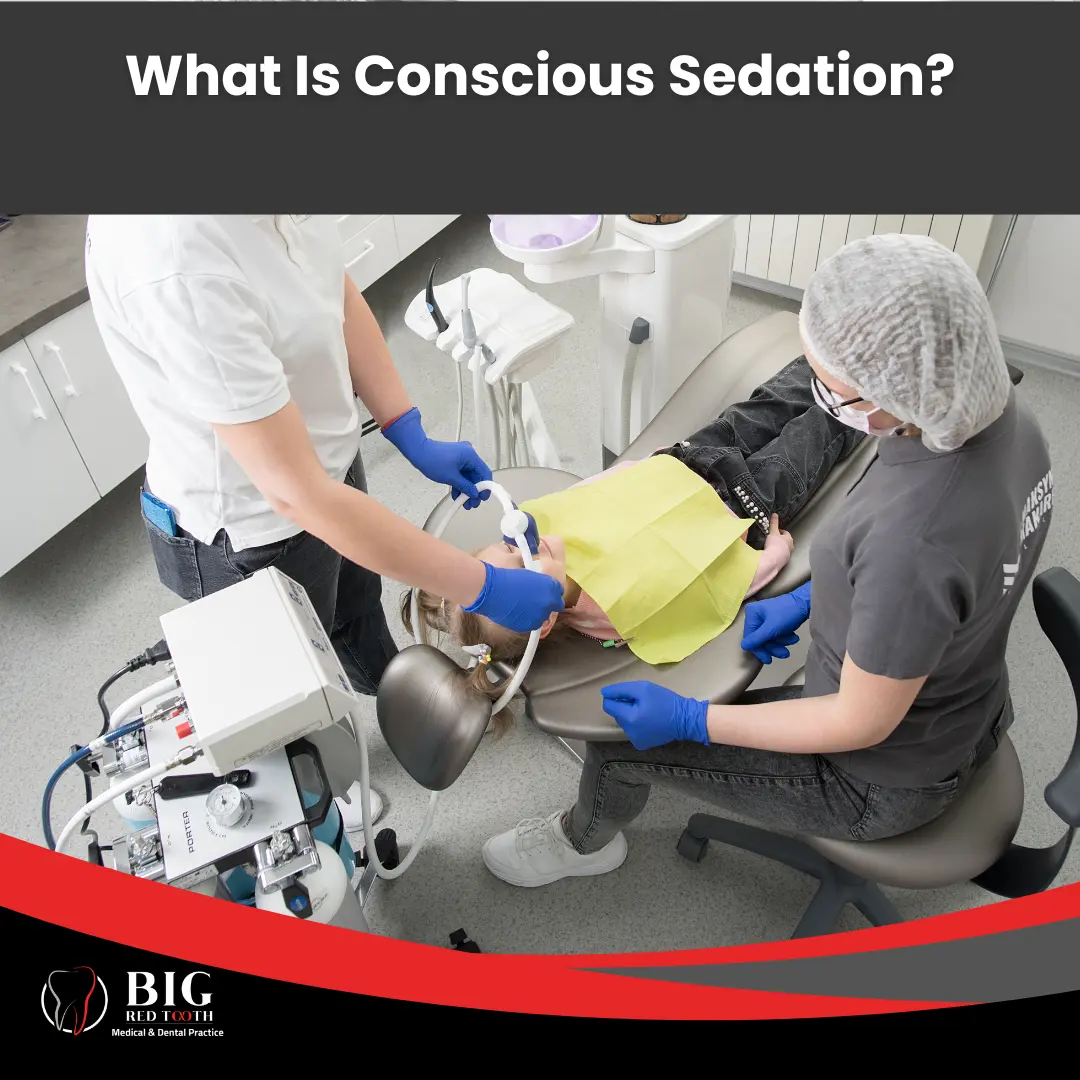
For some patients, the thought of visiting the dentist can bring feelings of anxiety, nervousness, or unease. Even when dental treatment is important, fear can make it difficult to sit comfortably in the dental chair or proceed with necessary care. Conscious sedation can help make dental treatment a more relaxed and manageable experience for patients who need additional support with anxiety or discomfort.
Conscious sedation is an established approach to anxiety control that helps patients feel calm and sleepy while allowing dental treatment to take place. It can be used alongside local anaesthetic and may be suitable for certain procedures or patients who find dental treatment particularly challenging.
What Is Conscious Sedation?
Conscious sedation involves using medication to create a relaxed, drowsy state during dental treatment. Depending on the individual circumstances, sedation may be administered in different ways, including orally, through inhalation, or intravenously. Your dentist will consider your health, medication, anxiety levels, and planned treatment when determining whether sedation is appropriate.
Intravenous conscious sedation is administered through a small cannula placed in a vein in the hand or arm. The sedative is given gradually, allowing the dental team to adjust the level of sedation according to the patient’s needs. Local anaesthetic is then used to numb the treatment area before dental work begins.
The aim is to help patients feel relaxed and less aware of the dental experience. Patients remain able to respond to the dental team, while the sedative can make them feel sleepy and calm. Some people have little or no memory of the procedure afterwards.
Who May Benefit From Conscious Sedation?
Conscious sedation can be particularly helpful for people who experience significant dental anxiety or find certain procedures difficult to tolerate. It may also be considered for patients undergoing treatments that could otherwise feel uncomfortable or stressful.
For some patients, anxiety can make even routine dental care feel overwhelming. Sedation can help create a calmer experience, making it easier to receive the treatment needed. It may also be considered for procedures such as tooth extractions or other treatments where additional anxiety control could improve the patient’s comfort.
Before treatment, your dentist will discuss your medical history and any medication you take. This information helps the dental team determine whether conscious sedation is suitable and plan the safest approach for your individual circumstances.
What Can You Expect During and After Sedation?
Before conscious sedation, your dentist will explain the planned treatment and discuss what you can expect. For intravenous sedation, your blood pressure may be checked before the sedative is administered. During treatment, the dental team monitors you closely, including your breathing, while the sedative is given gradually.
Local anaesthetic is used to numb the area being treated, so the dental procedure itself should not be painful. You may experience some mild discomfort from the local anaesthetic injection, and your dental team will work to keep you as comfortable as possible throughout the appointment.
After treatment, you may remain sleepy or feel less coordinated for some time. You will be monitored in a recovery area and should only leave once your dentist has confirmed that it is safe to do so. An appropriate adult will need to accompany you home, and you should follow all aftercare instructions provided by your dental team.
The effects of sedation can continue after you leave the practice, even if you feel well. For this reason, patients should rest and follow their dentist’s instructions carefully. Activities such as driving, operating machinery, making important decisions, or caring for dependants may need to be avoided until the following day.
A More Comfortable Approach to Dental Care
Dental anxiety should never prevent you from receiving the care you need. Conscious sedation can provide an additional option for suitable patients who would benefit from a calmer and more comfortable dental experience.
At Big Red Tooth, every patient’s needs are different. If you feel anxious about dental treatment or are concerned about an upcoming procedure, speak to our team about your options. A consultation allows your dentist to understand your concerns, assess your individual needs, and determine whether conscious sedation may be appropriate for you.
With the right preparation, professional monitoring, and personalised care, dental treatment can become a more comfortable and positive experience.
At the Big Red Tooth Centre for Advanced Oral Health Excellence, we’re dedicated to creating confident smiles through expert, compassionate care. Founded in 2014 by Dr Ebrahim Boda, our Fourways-based clinic offers comprehensive dental services, from paediatric care and restorative treatments to advanced aesthetic and prosthodontic solutions.
Our team values excellence, integrity, and personalised attention, ensuring every patient receives the highest standard of care in a comfortable environment. Using the latest dental technologies, we tailor every treatment to your unique needs for lasting oral health and natural, beautiful results.
Experience the difference at Big Red Tooth. Where advanced dentistry meets genuine care.
_________________________________________________________________________________________
Frequently Asked Questions About Conscious Sedation
1. What is conscious sedation in dentistry?
Conscious sedation is a method of helping patients feel calm and relaxed during dental treatment. Sedative medication can create a sleepy, relaxed state while the patient remains responsive to the dental team. It may be used alongside local anaesthetic to help make dental treatment more comfortable for patients who experience anxiety or find certain procedures difficult.
2. Who can benefit from conscious sedation at the dentist?
Conscious sedation may be suitable for patients who experience significant dental anxiety, have difficulty coping with dental procedures, or are undergoing treatment that may feel particularly stressful. Your dentist will assess your medical history, medication, anxiety levels, and planned treatment to determine whether sedation is appropriate for you.
3. Is conscious sedation the same as being put under general anaesthesia?
No. Conscious sedation and general anaesthesia are different. With conscious sedation, patients remain responsive and can communicate with the dental team, although they may feel sleepy and relaxed. General anaesthesia causes a deeper state of unconsciousness and is generally provided in an appropriate hospital setting when clinically required.
4. Is dental treatment painful when using conscious sedation?
Conscious sedation is designed to help reduce anxiety and create a calmer treatment experience. Local anaesthetic is also used to numb the area being treated, so the dental procedure itself should not be painful. Some patients may experience mild discomfort from the local anaesthetic injection or temporary tenderness after treatment.
5. How is intravenous conscious sedation administered?
With intravenous conscious sedation, a small cannula is placed into a vein in the hand or arm. The sedative medication is administered gradually, allowing the dental team to adjust the level of sedation according to the patient’s needs. Patients are closely monitored throughout the procedure to support their safety and comfort.
6. What should I expect after conscious sedation?
After conscious sedation, you may feel sleepy, drowsy, or less coordinated for several hours. You will be monitored in a recovery area until your dentist confirms that you are ready to leave. You will need an appropriate adult to accompany you home and should follow your dentist’s instructions about rest and activities after treatment.
7. Is conscious sedation safe for dental treatment?
Conscious sedation is an established method of managing dental anxiety when it is appropriately planned and administered. Your dental team will assess your medical history beforehand and monitor you during treatment. As with any medical procedure, there are potential risks, which your dentist will discuss with you before you provide consent.
8. Can I drive after having conscious sedation?
No. The effects of sedation can continue after you leave the dental practice, even if you feel alert. You should not drive, operate machinery, make important decisions, or carry out activities requiring full coordination until your dentist advises that it is safe to do so. Following your post-sedation instructions carefully is an important part of your recovery.