
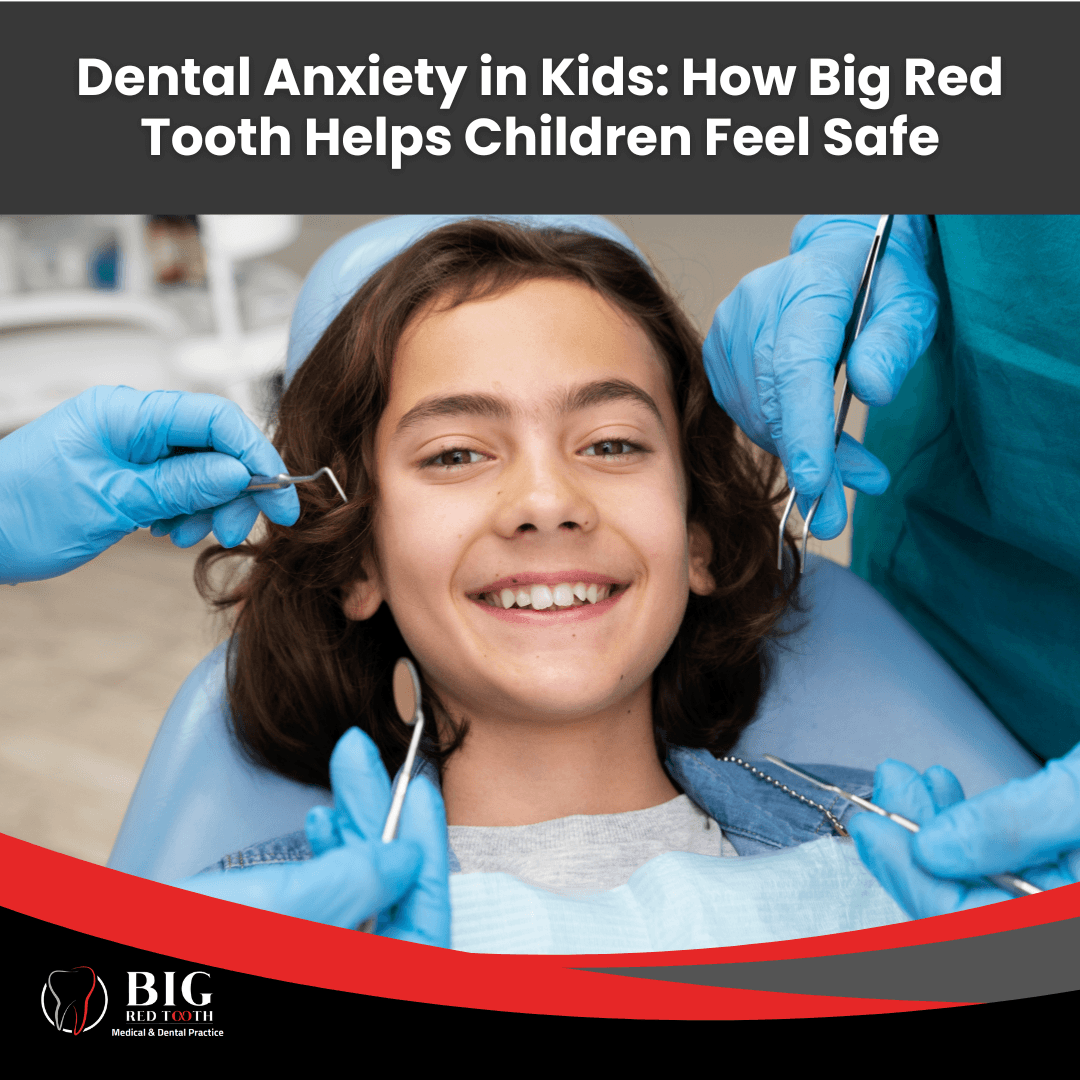
Fear of the dentist is something many children experience. Unfamiliar environments, strange sounds, and the anticipation of discomfort can make even routine visits feel overwhelming. The good news is that with the right approach, dental care can become a positive and even enjoyable experience. At Big Red Tooth, creating a sense of comfort and trust is at the heart of every paediatric visit, helping children feel safe and confident in the dental chair.
Understanding Where Dental Anxiety Comes From
Dental anxiety in children can develop for several reasons. For some, it stems from a previous uncomfortable experience, whether their own or something they have heard from others. Even stories from friends, siblings, or media can shape a child’s expectations before they ever step into a practice.
The clinical environment itself can also feel intimidating. Bright lights, unfamiliar instruments, and new faces may cause uncertainty. Younger children, in particular, may struggle with not knowing what will happen next. This lack of control can heighten feelings of fear.
Separation anxiety can also play a role, especially for very young patients who may feel uneasy being away from their parents during an examination. In other cases, sensitivity to sound or touch can make certain aspects of dental care feel overwhelming.
Recognising these triggers is the first step in helping children feel more at ease. When dental professionals understand the root of a child’s anxiety, they can adapt their approach to provide reassurance and support.
How Big Red Tooth Creates a Calm, Friendly Environment
At Big Red Tooth, the paediatric team focuses on building trust from the very first interaction. A warm welcome, friendly faces, and a relaxed atmosphere help children feel comfortable as soon as they arrive.
Communication is gentle, clear, and age-appropriate. Dentists take time to explain each step in simple terms, helping children understand what is happening and why. This approach removes uncertainty and gives young patients a sense of control.
The team often uses a “tell, show, do” method. Children are first told what will happen, then shown the tools or actions in a non-threatening way, and finally guided through the procedure. This step-by-step process helps reduce fear and builds familiarity.
Appointments are paced carefully to suit each child. There is no rush, allowing time for questions, reassurance, and breaks if needed. Positive reinforcement plays an important role, with praise and encouragement helping children feel proud of their cooperation.
The environment itself is designed to feel welcoming rather than clinical. Small touches, such as a calm tone of voice, friendly interaction, and a focus on comfort, make a meaningful difference. Over time, these experiences help children associate dental visits with safety rather than stress.
How Parents Can Help Children Feel Brave and Relaxed
Parents play a key role in shaping how children feel about dental visits. Preparing children in a calm and positive way can make a significant difference.
It helps to speak about the dentist in a reassuring and matter-of-fact manner. Avoid using words that may create fear, and focus instead on the importance of keeping teeth healthy and strong. Reading children’s books about dental visits or watching friendly, age-appropriate videos can also help set expectations.
Consistency is important. Regular check-ups help children become familiar with the environment and build trust with the dental team. The more routine the visits feel, the less intimidating they become.
On the day of the appointment, staying calm and supportive is essential. Children often pick up on their parents’ emotions, so a relaxed approach can help them feel more secure. Bringing a favourite toy or comfort item can also provide reassurance.
After the visit, positive reinforcement can strengthen confidence. Praising a child for their bravery or cooperation helps build a sense of achievement and encourages a positive attitude toward future appointments.
Working together with the dental team creates a supportive experience that helps children feel understood and cared for at every stage.
Building Confidence for Lifelong Oral Health
With patience, understanding, and the right approach, dental anxiety can be gently reduced over time. At Big Red Tooth, every effort is made to create a supportive environment where children feel safe, respected, and encouraged.
A gentle touch, clear communication, and consistent care help build trust and confidence. As children grow more comfortable with dental visits, they develop healthy habits and a positive outlook on oral care that can last a lifetime.
At the Big Red Tooth Centre for Advanced Oral Health Excellence, we’re dedicated to creating confident smiles through expert, compassionate care. Founded in 2014 by Dr Ebrahim Boda, our Fourways-based clinic offers comprehensive dental services, from paediatric care and restorative treatments to advanced aesthetic and prosthodontic solutions.
Our team values excellence, integrity, and personalised attention, ensuring every patient receives the highest standard of care in a comfortable environment. Using the latest dental technologies, we tailor every treatment to your unique needs for lasting oral health and natural, beautiful results.
Experience the difference at Big Red Tooth. Where advanced dentistry meets genuine care.
Frequently Asked Questions About Dental Anxiety in Kids
1. What causes dental anxiety in children?
Dental anxiety in children can be caused by fear of the unknown, previous negative experiences, or stories they have heard from others. The sights, sounds, and sensations of a dental practice can also feel overwhelming, especially for younger children who are still learning to process new environments.
2. How can I tell if my child is afraid of the dentist?
Signs of dental anxiety in children include crying, resistance to appointments, trouble sleeping before a visit, or physical symptoms such as stomach aches. Some children may also become quiet or withdrawn when discussing dental care.
3. How do dentists help children feel comfortable during appointments?
Paediatric dentists use gentle communication, simple explanations, and step-by-step techniques to help children feel at ease. Approaches such as the “tell, show, do” method and positive reinforcement help build trust and reduce fear over time.
4. At what age should my child start visiting the dentist?
Children should visit the dentist by their first birthday or when their first tooth appears. Early visits help children become familiar with the dental environment and support the development of positive, stress-free habits.
5. What can parents do to reduce dental anxiety before an appointment?
Parents can prepare children by speaking positively about the dentist, avoiding negative language, and explaining what to expect in simple terms. Reading books or watching child-friendly videos about dental visits can also help reduce fear.
6. Is it normal for children to feel nervous about dental visits?
Yes, it is very common for children to feel nervous about visiting the dentist. With consistent, positive experiences and supportive care, most children become more comfortable and confident over time.
7. Should parents stay with their child during a dental appointment?
In many cases, younger children benefit from having a parent nearby for reassurance. As children grow more confident, they may feel comfortable attending parts of the appointment independently, depending on the dentist’s guidance.
8. How can regular dental visits help reduce anxiety?
Routine check-ups help children become familiar with the dental environment and build trust with the dental team. Over time, this consistency reduces fear and helps children see dental visits as a normal and positive part of their routine.